Europe
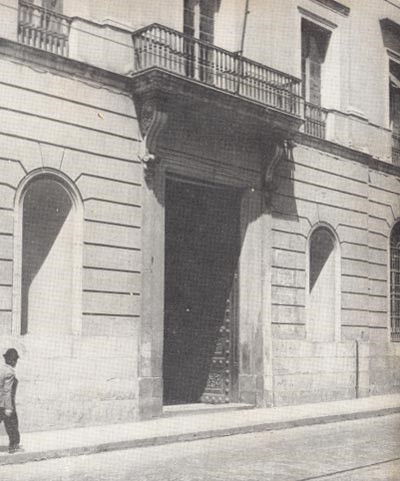
Education in Europe
University of Paris (France) University of Heidelberg (Germany) He stayed in the house of Lutheran Minister Dr. Karl Ullmer Inducted as a member of the Berlin Ethnological Society and the Berlin Anthropological Society under the patronage of the famous pathologist Rudolf Virchow He also met Dr Adolph Meyer – scientist.
July 1885 – Rizal arrived in Paris Rizal quickly found the eye clinic of the famed opthalmologist, Louis de Wecker. From Madrid, Rizal in 1885 went to Paris and continued his medical studies under an eye specialist. The next year, Rizal went to Germany and studied ophthalmology. He was registered at Dr. Louis de Wecker’s clinic. After four months training, he learned the technique of the eye operation.
While Rizal was in Paris, he kept busy writing his novel. During his free time, he visited his fellow countrymen – Pardo de Taveras – and (Trinidad, Felix and Paz) including Juan Luna. Luna Painted a historical canvass, “The Blood Compact” in which Rizal posed as Sikatuna and Trinidad as Legaspi. He also posed for a group picture called “The Death of Cleopatra” wherein he dressed as an Egyptian priest.
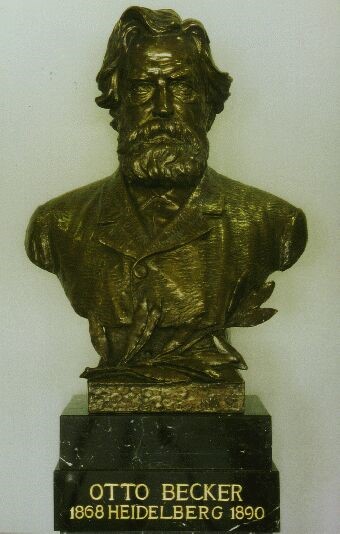
Rizal also had special training under Dr. Otto Becker. Rizal accounted: “For some 13 days now, I’ve been attending the clinic for eye diseases under the direction of another famous oculist called Otto Becker.” Under Dr. Becker there was a vigorous course of study with less attention to actual operations. The experience in Paris with first-hand patient operations helped Rizal to emerge as one of Becker’s best students.
Aside from these two clinics, Rizal also had a practice at a certain Clinic in Berlin where he worked as an assistant of Dr. Schultzer, an eminent German ophthalmologist. “At the hospital I practice and examine patients who come every day. The professor corrects our mistakes in diagnosis; I help in the treatment and although, I don’t see so many operations as I did at Paris, here I study more the practical side.” In Heidelberg, Rizal had a privilege to work in the clinic of a noted Polish ophthalmologist, Dr. Javier Galezowsky.
Heidelberg
University of Heidelberg
25-year-old Rizal completed in 1887 his eye specialization under the renowned Prof. Otto Becker in Heidelberg Left Heidelberg a poem, “A las flores del Heidelberg” (April 22, 1886); both an evocation and a prayer for the welfare of his native land and the unification of common values between East and West.
A las flores del Heidelberg
Go to my country, go foreign flowers, Planted by the traveler on his way, And there beneath that sky of blue That over my beloved towers, Speak for this traveler to say What faith in his homeland he breathes to you.
Go and say.... Say that when the dawn First brew your calyx open there Beside the River Necker chill, You saw him standing by you, very still, Reflecting on the primrose flush you wear.
Say that when the morning light Her toll of perfume from you wrung, While playfully she whispered, "How I love you!“ He too murmured here above you Tender love songs in his native tongue. That when the rising sun the height Of Koenigsthul in early morn first spies, And with its tepid light Is pouring life in valley, wood, and grove, He greets the sun as it begins to rise, Which in his native land is blazing straight above.
And tell them of that day he staid And plucked you from the border of the path, Amid the ruins of the feudal castle, By the River Neckar, and in the sylvan shade.
Tell them what he told you As tenderly he took Your pliant leaves and pressed them in a book, Where now its well-worn pages close enfold you. Carry, carry, flowers of Rhine, Love to every love of mine, Peace to my country and her fertile loam, Virtue to her women, courage to her men, Salute those darling ones again, Who formed the sacred circle of our home.
And when you reach that shore, Each kiss I press upon you now, Deposit on the pinions of the wind, And those I love and honor and adore Will feel my kisses carried to their brow.
Ah, flowers, you may fare through, Conserving still, perhaps, your native hue; Yet, far from Fatherland, heroic loam To which you owe your life, The perfume will be gone from you; For aroma is your soul; it cannot roam Beyond the skies which saw it born, nor e'er forget.
 © 2CS Letran-Calamba 2014